
Your Cart is Empty



Last Updated: October 28, 2026
Quick Summary
Gold prospecting equipment hire is a worthwhile option for beginners looking to test gear on their own land before committing to a purchase. The best way to assess value is to obtain a written quote detailing the hire rate, bond, included items, and return conditions. Hire rates are not published here, so request a current quote directly from the provider.
Lost Treasures offers detector hire alongside sales, training, and recovery services.
Hire arrangements typically function in one of two ways: you can collect equipment from a local provider, or have it supplied by a service covering a wider area. Clarify what the hire includes before you depart.
Lost Treasures provides metal detectors and fossicking equipment.
A common oversight is hiring equipment without requesting a brief walkthrough of its controls. A ten-minute setup session at the outset can prevent a full weekend of frustration.
Most beginners require only a few essential items. A metal detector is the primary piece of equipment, and its suitability should match the type of ground you intend to prospect. A gold pan is the second crucial item, enabling you to separate gold from gravel without needing a power source.
Ground conditions influence the choice of detector and accessories:
Before collecting hired gear, confirm the kit contains:
For panning, the XP Premium Pan Kit is a recommended starting option. It features a four-zone pan with large riffles for initial cleaning, smaller riffles for finer material, a SnakeSkin profile for black sand separation, and a smooth zone for the final clean. It also includes 10mm and 5mm classifiers, an accessory kit with a snuffer, pipette, and vials, a manual, and a carry bag, priced at $139.00 AUD.
The XP Starter Panning Kit costs $99.00 AUD and includes a pan, a 10mm classifier, the accessory kit, and a manual. The 7Pc Gold Panning Kit is $90.00 AUD and includes sifting pans, magnifier tweezers, and two glass vials.
The Trailblazer 10" Backpack Sluice is $159.00 AUD.
A common oversight is hiring equipment without requesting a brief walkthrough of its controls. A ten-minute setup session at the outset can prevent a full weekend of frustration.
The article outlines the core items and ground-specific gear a beginner should match to their prospecting site.
| Ground type | | --- | --- | --- | | Highly mineralised red soil | Detector with ground-balance control and smaller coil | Ground noise is the main enemy | | River gravel and creek beds | Waterproof coil, scoop, backpack sluice | Panning is the final separation step | | Dry, remote ground | Spare batteries or charger, light kit | Battery life and portability matter most | | Public fossicking areas | Hand tools, small footprint | Confirm what the site permits first |
Verified daily or weekly hire rates for Lost Treasures are not available in this guide. Please request a current quote directly via the enquiry form before planning your trip.
A detector hire quote typically includes several components beyond a simple daily rate:
As terms vary between providers, obtain these details in writing before committing:
The cost of hiring a gold detector is a frequent query. A clear, written quote that itemises the rate, bond, inclusions, and return conditions will resolve most uncertainties.
Lost Treasures offers detectors for sale online and in-store, in addition to their hire services.
Begin in a location where you have permission and where gold is known to occur. Sweep the coil slowly and evenly, keeping it close to the ground, and listen for changes in tone. Dig only promising signals, and maintain neat holes for easy refilling.
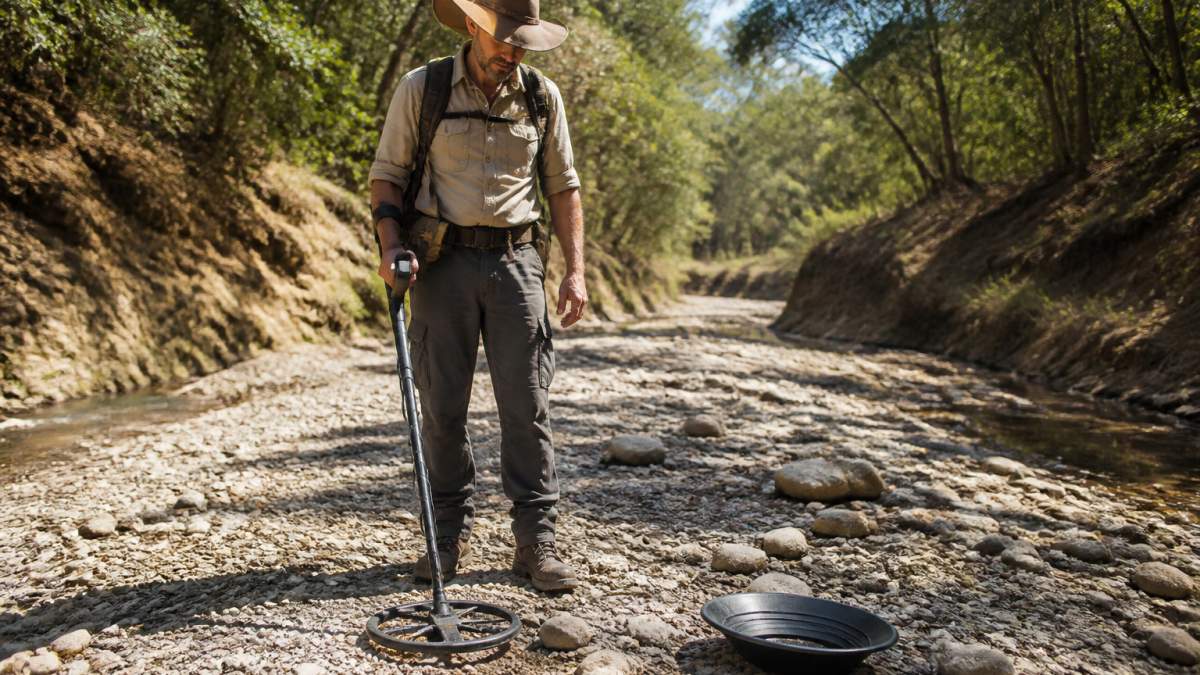
Gold is often found in small pieces, so a detector must be carefully tuned. Reduce sensitivity if constant ground noise occurs, and maintain a steady coil pace. Many beginners sweep too quickly, causing them to miss small targets. Even after successfully recovering a specimen, its true value remains uncertain until you seek a professional gold appraisal to confirm its purity and market worth.
When a signal sounds promising, pinpoint its location with a few perpendicular passes, then dig a small hole. Inspect the excavated soil with your hands before setting it aside. Panning the material you dig is the final step in separating gold from the gravel.
Exercise caution: digging large holes in creek beds can destabilise banks and negatively impact the site for others. Always maintain a small footprint.
Before excavating anywhere, verify the regulations applicable to the land you intend to work. Access requirements differ across states and territories, and between public and private land. Rules governing fossicking, detector use, and material removal are established by the relevant state or territory authority. Consult the official government source for the specific area you plan to visit.
Private land always requires the landowner's consent. Some public areas necessitate a fossicking permit or have restricted access, while certain sites may be entirely closed. Reputable hire providers can often direct you to the necessary guidance, but the ultimate responsibility lies with you.
Responsible prospecting involves refilling holes, adhering to permitted areas, and leaving the site as you found it. These practices help maintain the hobby's positive standing with landholders and authorities.
Contact Lost Treasures via the enquiry form.
Lost Treasures provides training for all skill levels and recovery assistance.
Once you have your equipment, test it at home first. Check the battery, fit the coil, and listen through the headphones. A brief trial in your backyard will familiarise you with the detector's response before you head to the field.
Begin your experience with Lost Treasures by submitting an enquiry through the form.
Yes. Lost Treasures offers detector hire alongside its sales range. Check current hire rates and booking conditions directly with the store.
Ask Lost Treasures for current hire pricing and details of what is included.
Permission rules vary by state and by land type, so check with the relevant state government department before you head out. Some areas are open to prospecting, while national parks, reserves, private property and areas under mining tenure may be restricted or closed. Carry any permits or access documents you need and always obtain the landholder's permission before entering private land.
Lost Treasures' XP Starter Panning Kit is $99.00 and its XP Premium Pan Kit is $139.00.
Comments will be approved before showing up.


