
Your Cart is Empty



Last Updated: October 16, 2026
Choosing the right high performance gold detector depends on your experience level, budget, and terrain. This comparison helps you match a detector to your needs.
| Detector Model | Technology | Best For | Starting Price | Key Strength |
|---|---|---|---|---|
| Garrett Vortex VX9 | Multi-Frequency | Beginners & beach hunting | $1,299 | Fully upgradeable, waterproof to 5m |
| XTREM HUNTER | Multi-Frequency (FMF) | Deep targets & large finds | $4,499 | Reaches 5 metres depth, lightweight |
| Nokta Magnetar 9000 | Pulse Induction | Mineralized ground & all gold sizes | $7,999 | Dual-receiver coils, sub-gram to deep nuggets |
| USED Minelab GPX 6000 | Pulse Induction (GeoSense-PI) | Professional prospectors | $7,995 | 40% more depth, excellent ground balance |
| USED Minelab GPZ 7000 | Pulse Induction | Serious gold hunters | $7,500 | Industry benchmark, 256 noise cancel channels |
The Garrett Vortex VX9 is the best entry point for newcomers. At $1,299, it delivers professional-grade features without the learning curve of complex pulse induction models.

Its simplicity and genuine capability make it ideal for beginners. The multi-frequency platform handles mineralized soil without constant manual adjustment, and seven search modes let you start pre-tuned and graduate to custom configurations. The waterproof design to 5 metres opens up beach and creek hunting.
Many prospectors worry entry-level equipment won't perform in challenging ground. The Vortex proves that concern outdated: its Hi-Resolution Ground Balance handles highly mineralized soils, and Iron Audio teaches you to distinguish genuine signals from false positives.
The fully upgradeable platform matters more than most guides acknowledge. Garrett designed the Vortex series so you can add operating frequencies and features via software enhancements without buying a new detector, future-proofing your investment.
Pulse Induction (PI) and Very Low Frequency (VLF) detectors represent fundamentally different approaches to finding gold. Understanding the trade-offs determines whether you're buying the right tool for your ground.
VLF detectors like the Garrett Vortex use simultaneous multi-frequency transmission to analyse target conductivity and iron content. They excel in trashy areas with precise discrimination, offer fast recovery speed, and have a gentler learning curve.
Pulse Induction detectors like the Nokta Magnetar 9000 and Minelab GPX series transmit powerful pulses and listen to the returning echo. PI inherently ignores ground mineralisation, the reason prospectors favour them in harsh Australian soils. Depth performance is superior, especially on large nuggets, but reduced discrimination means digging more trash.

The real difference emerges in mineralized ground. Red soils across Australian goldfields contain iron oxides that confuse VLF detectors, causing false signals and ground noise. PI technology cuts through this interference, maintaining stable performance where VLF becomes unreliable.
For beginners in non-mineralized areas, VLF offers faster skill development. For serious prospectors in harsh ground, PI is non-negotiable. At Lost Treasures, we recommend matching technology to your terrain rather than brand reputation.
Sensitivity and ground balance separate frustration from success in challenging ground. Understanding how they interact prevents the common mistake of cranking sensitivity to maximum and wondering why your detector screams constantly.
Sensitivity determines how strongly the detector responds to metal targets. Higher sensitivity finds smaller targets and reaches greater depth, but also amplifies ground noise from iron minerals. In mild ground you can run near maximum; in mineralized soil, excessive sensitivity creates false signals that waste digging time.
Ground balance is the detector's ability to ignore soil mineralisation while still detecting metal. Manual ground balance tunes the detector to your specific patch of earth; automatic ground balance adjusts continuously as soil conditions vary.
The interaction between these controls matters more than either setting alone. Excellent ground balance technology lets you run higher sensitivity safely, which is why professional models from Minelab and Nokta command premium prices: their algorithms handle extreme mineralization that overwhelms simpler detectors.
At Lost Treasures, we've worked with prospectors across diverse Australian terrain. The pattern is consistent: proper ground balance setup takes 5 minutes and saves hours of wasted digging.
Coil selection is where many prospectors leave performance on the table. The relationship between coil size, target sensitivity, and ground coverage determines how effectively you'll hunt.
Larger coils cover more ground per sweep and excel at large, deep targets. A larger coil reaches deeper than a smaller coil on the same detector, but sensitivity to small targets drops and manoeuvring around rocks and brush gets harder.
Smaller coils excel at pinpointing small gold and navigating tight terrain. A smaller coil picks up micro-nuggets a larger coil might miss, sacrificing depth for precision. They work best when clearing a patch thoroughly or working around obstacles.
The Coiltek Goldhawk range offers practical choices for different scenarios. The Coiltek 10" x 5" Goldhawk Mono Coil at $675 delivers excellent pinpointing for small gold in tight areas. The Coiltek 14" x 9" Goldhawk Mono Coil at $735 covers more ground and reaches deeper targets.
Many prospectors own multiple coils for different hunting styles. Start with the coil your detector ships with, then add a complementary size once you understand your local terrain. The Axiom range offers flexibility: the Axiom 13" x 11" Mono Searchcoil at $799 and Axiom 16 x 14" Mono Coil at $849 both fit Axiom detectors.
For serious prospectors, high performance gold detectors in 2026 models from Minelab and Nokta represent the cutting edge. These aren't entry-level tools; they're built for prospectors who understand what separates good equipment from exceptional gear.
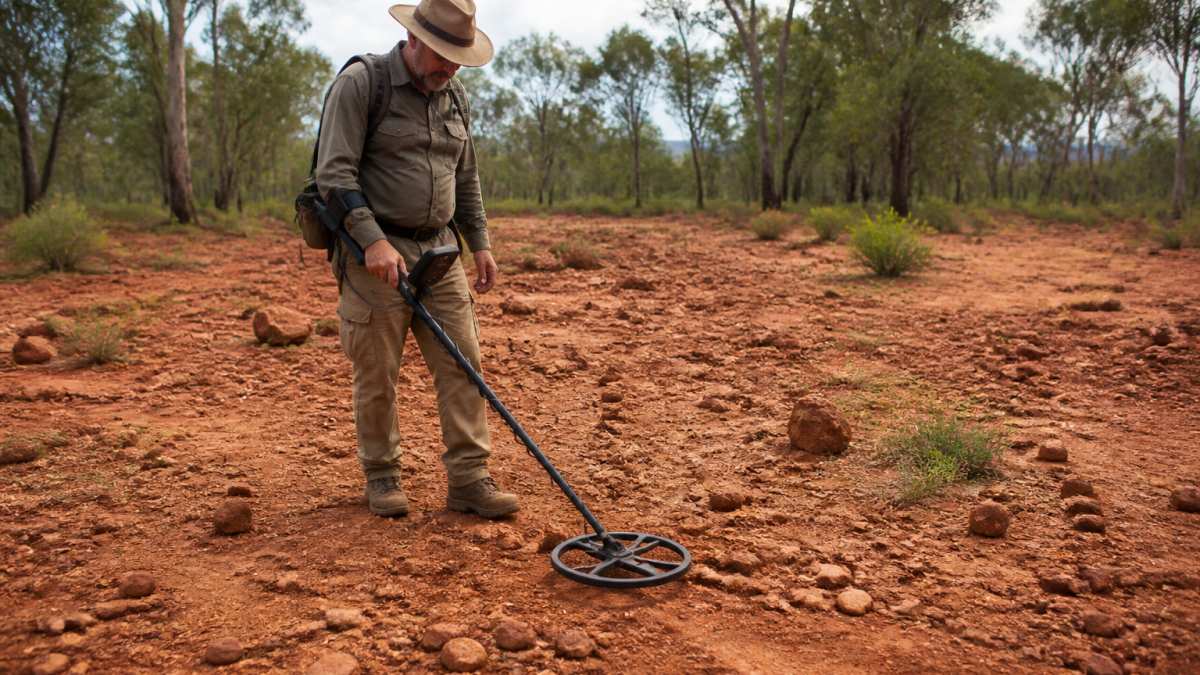
The USED Minelab GPX 6000 at $7,995 sets the industry standard for balanced performance. Its GeoSense-PI technology delivers real-time ground analysis, meaning the detector continuously adapts to soil conditions as you sweep. This detector finds everything from sub-gram flakes to large deep nuggets.
What separates professional models from mid-range detectors is depth performance and stability in extreme conditions.
The USED Minelab GPZ 7000 at $7,500 is purpose-built for deep nuggets, offering up to 40% more depth than previous GPX Series detectors. The Super-D coil is highly sensitive to gold of all sizes, and 256 Noise Cancel channels maintain stable performance where ground mineralisation would overwhelm simpler equipment.

The GPZ 7000 includes professional accessories: a Pro-Swing 45 harness, wireless audio modules, and built-in GPS with PC mapping tools. These tools let you hunt longer and cover more ground efficiently, and the 1-year store warranty from Lost Treasures provides peace of mind on a significant investment.
The Nokta Magnetar 9000 arriving mid-December 2026 handles both deep and small gold simultaneously. Advanced Pulse Induction with a Dual-Receiver Coil system delivers clear target response on deep gold and micro-nuggets, and it ships with two coils: a large 14.5" x 13" for coverage and an 11" x 8" elliptical for pinpointing small targets.
The Magnetar is built for harsh goldfield soil. Easy and Expert search modes let you start simply and progress to advanced control, and it's fully submersible to 3 metres for creek and wet ground. Bluetooth wireless headphones and up to 10 hours battery life let you hunt all day without cables or power anxiety.
The deposit system ($400 deposit, full price $7,999) guarantees your place in the initial batch. The Magnetar is arriving and ready for release in Australia mid December after extensive testing in our challenging gold bearing soils.
Purchase price is only the beginning of detector ownership costs. Understanding total ownership cost prevents the false economy of buying cheap equipment that becomes frustrating or obsolete.
A high performance gold detector 2026 model from a quality manufacturer carries hidden value budget options don't match.
Coil costs add up quickly. Replacement coils range from $675 to $849 depending on size and type, so two or three coils to match different terrain means $2,000-$2,500 in additional investment.
Warranty and support matter more than most prospectors realise. The 1-year store warranty on used Minelab models from Lost Treasures provides genuine security. Budget detectors often ship with 90-day warranties or none at all. When your detector fails in the field, a proper warranty means replacement, not repair costs.
Battery technology affects long-term value. Modern lithium-ion batteries in professional detectors last 10+ hours per charge, while older nickel-cadmium batteries degraded quickly and became expensive to replace.
At Lost Treasures, we offer flexible payment options including Afterpay, Zip, and Humm. These let you spread the cost of a quality detector across manageable payments rather than delaying your purchase.
Owning a high performance gold detector is one thing. Using it effectively is another. Setup and technique separate successful prospectors from frustrated hobbyists.
Start with ground balance. Every detector requires tuning to your specific patch of earth.
Set sensitivity conservatively until you understand your ground. Start at 60% and increase by 10% increments until you hear constant ground chatter, then reduce by 5-10%.
Coil technique matters more than equipment brand. Keep your coil parallel to the ground, moving in overlapping sweeps at a steady pace.
Listen actively. A genuine target signal is sharper, more defined, and repeatable when you sweep back over the same spot; ground noise is usually vague and changes as you move.
Document your finds.
Finding the right high performance gold detector means matching technology to your experience level and terrain.
At Lost Treasures, we provide more than equipment.
High performance gold detectors deliver superior depth, stability in mineralized ground, and faster target response. They use advanced pulse induction or multi-frequency technology to detect both small micro-nuggets and deep large targets. Models like the Minelab GPZ 7000 offer up to 40% more depth than older series, precision ground balance for varied soil types, and 256 noise-cancel channels for consistent performance in tough conditions.
Pulse induction (PI) detectors excel in highly mineralized ground and detect all gold sizes, from fine flakes to large nuggets, making them the preferred choice for serious gold prospecting. VLF (Very Low Frequency) detectors work well in mild soils but struggle in red mineralized earth. The Nokta Magnetar 9000 uses advanced PI technology optimized for harsh goldfield soil, while the Minelab GPX 6000 uses GeoSense-PI for real-time ground analysis and automatic balance.
The Garrett Vortex VX9 at $1,299.00 is an excellent entry point, offering fully submersible waterproof design, multi-frequency operation, and seven detection modes without overwhelming complexity. It includes free wireless MS-3 headphones and delivers reliable performance across varied terrain. For those ready to invest more, the Nokta Magnetar 9000 (full price $7,999, with $400 deposit available) offers both Easy and Expert modes, allowing you to grow into advanced settings as your skills develop.
Larger coils (e.g., 14-17 inch equivalents) cover more ground and detect deeper targets, ideal for open terrain and large nuggets. Smaller coils (e.g., 10-11 inch equivalents) offer superior pinpointing and excel at finding micro-nuggets and flecks in rocky or brushy areas. Mono coils provide maximum depth in most soils; DD coils with focused cores perform better on small gold in severe mineral conditions. The Coiltek 14" x 9" Goldhawk ($735) suits open ground, while the 10" x 5" ($675) works well for precision work in tight spaces.
Comments will be approved before showing up.


